Veterinary hospitals balance urgent care, scheduled appointments, diagnostics, surgery, and client communication—often within the same busy hour. A crowded reception desk, a missing laboratory result, or a delayed discharge can disrupt the entire day. Improving efficiency does not mean rushing appointments or reducing attention to patients. It means making essential work easier to coordinate while protecting clinical judgment, accurate records, and compassionate care.
For teams exploring how to improve efficiency in veterinary hospitals, the most useful changes often begin with everyday workflows. Clear appointment scheduling, well-prepared examination rooms, consistent inventory checks, and reliable handoffs can reduce avoidable delays. A technician who has the right supplies ready, for example, can spend less time searching and more time supporting patient care. Small changes matter. They also need to fit the hospital’s staffing, caseload, and available technology; a process that works in one clinic may create friction in another. Track practical measures, such as appointment delays and time spent on repeat administrative tasks, and ask staff where problems actually occur. Listen closely. Efficiency efforts can miss the mark when leaders assume they know the cause. This guide examines practical ways to streamline hospital operations, improve team coordination, and make better use of resources without losing sight of the animals and people behind every appointment.
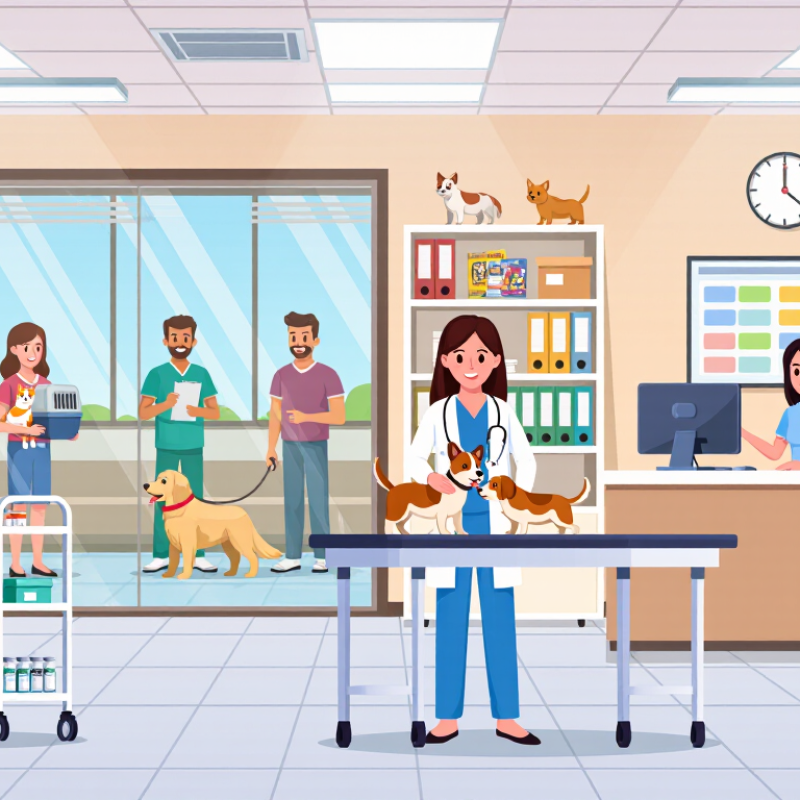
Assessing Current Workflows and Identifying Bottlenecks
A useful efficiency review starts with observation, not assumptions. Follow several appointments from check-in to discharge, and record when each handoff happens. Note how long patients wait for rooming, examination, diagnostics, and payment. A clipboard and simple timestamps can reveal patterns that staff may barely notice during a busy shift. Look for repeated interruptions, missing history details, and rooms left unused while another area is crowded. Small delays add up.
Ask receptionists, technicians, veterinarians, and clients where work tends to stall. Their answers may differ. That matters. Compare their observations with appointment schedules, revisit rates, and the time needed to close medical records. A bottleneck may come from uneven appointment lengths, unclear task ownership, or supplies stored far from the treatment area. Avoid treating every delay as a staffing problem. Sometimes the process is the problem.
Our first workflow map may be wrong. Staff might skip steps when describing a routine day, and one unusually difficult case can distort timing. Review more than one shift, then test a small change, such as preparing common exam supplies before appointments begin. Track whether waiting time improves without rushing conversations or documentation. Recheck with the team; a tidy chart does not always match the feel of a real shift.
Improving Appointment Scheduling and Patient Flow
Appointment scheduling works best when it reflects the real shape of a veterinary day. A routine vaccine visit may take less time than a new patient consultation, while an anxious dog or a complex medical history can change the plan. Ask about the reason for each visit when booking, and reserve suitable appointment lengths. Keep a few flexible slots for urgent cases, with a clinician guiding which patients need prompt assessment. Small changes matter.
Patient flow starts before the examination room. Send intake forms ahead of time, then confirm key details at check-in, such as current medications and the main concern. Clear directions for weighing, waiting, and preparing samples can prevent repeated trips across the clinic. Staff should also know who updates clients when appointments run late. A brief, honest estimate is better than leaving someone to guess.
Review the schedule after busy sessions. Track arrival delays, appointment overruns, and the times rooms sit unused; patterns may point to a booking mismatch or a handoff problem. Avoid filling every minute, since unexpected care is part of veterinary work. A perfect schedule is probably unrealistic. Teams may also need to adjust their process when a change saves time for one role but adds pressure to another.
Improving Appointment Scheduling and Patient Flow
Illustrative example: average minutes spent at key points in a veterinary visit. The figures are hypothetical and are not industry benchmarks.
Reducing check-in delays, late starts, room turnover time, and appointment overruns can help smooth patient flow. Track these measures locally to identify bottlenecks and evaluate changes.
Standardizing Clinical Procedures and Administrative Tasks
Standardizing clinical procedures and administrative tasks reduces avoidable variation without making care feel mechanical. Create short protocols for patient intake, room preparation, medication checks, discharge instructions, and follow-up calls. Each should name the responsible role and show where completion is recorded. Keep the checklist visible beside the treatment area, not buried in a shared folder. Small details matter: confirm the patient’s weight before calculating a dose, and review allergies during handoff.
The U.S. Bureau of Labor Statistics’ Occupational Outlook Handbook projects 19% employment growth for veterinary technologists and technicians from 2023 to 2033. That pressure makes clear workflows especially useful: trained staff can complete routine steps consistently, while veterinarians focus on clinical decisions. Standardize appointment templates, estimate approvals, invoice codes, and callback notes, too. A shared callback log with an owner and due time can prevent a message from disappearing between shifts. Keep exceptions easy to flag; a protocol should guide judgment, not replace it.
Measure a few practical indicators each month, such as incomplete records, delayed callbacks, and room turnover time. Compare results across similar shifts before changing the process. We still miss things. That is worth admitting. A checklist can become a rushed ritual if nobody reviews whether it fits real appointments. The BLS projection signals workforce demand, not a guaranteed efficiency gain; teams should test each change locally and ask staff where steps create friction.
Using Technology to Coordinate Records, Communication, and Inventory
A shared digital record helps veterinary teams find the same patient history without searching through separate files. Use clear templates for medication changes, test results, and follow-up instructions. Keep entries dated and identify who made each update. This reduces ambiguity, though duplicate fields can still invite errors. That matters.
Connect records with a communication workflow that assigns messages to a specific role or staff member. A nurse finishing a morning appointment, for example, can flag a callback and note its deadline. The veterinarian can review the task between consultations instead of relying on a paper note near the phone. Keep urgent alerts distinct from routine reminders. Too many notifications become background noise.
Inventory tools work best when they reflect actual use. Track common items, set reorder points, and record stock as supplies are opened or received. Linking usage to treatment records can reveal patterns, but only if staff enter quantities consistently. Review expiry dates during regular counts, not just when shelves look low. A monthly check can catch inaccurate thresholds before they trigger unnecessary orders. Digital systems are not a cure for unclear ownership; teams still need to decide who updates counts and resolves discrepancies. A small pilot in one treatment area can expose awkward steps before the workflow expands hospital-wide.
Supporting Team Training and Measuring Efficiency Improvements
Efficiency improves when staff know what good coordination looks like.
Use short, role-specific training during quieter shifts. A receptionist might practice confirming appointment details, while a veterinary technician rehearses preparing a room between patients.
Keep instructions visible near the work area.
Small reminders help when the schedule gets crowded.
Training should include realistic interruptions.
A phone rings. A patient needs extra time. Teams can walk through these moments and agree on who updates the schedule or alerts the veterinarian. Brief check-ins after busy periods can reveal confusing steps.
Avoid treating every delay as an individual failure; unclear handoffs may be the real cause.
Some training plans will miss things at first.
Measure a few indicators that reflect daily work,
such as room turnaround time, appointment delays, and incomplete medical records. Set a baseline before changing a process, then review the same measures weekly. A simple spreadsheet may be enough.
Pair numbers with staff observations,
because faster room turnover is not useful if cleaning or patient comfort suffers. If a new checklist adds time without reducing errors, revise it with the people using it. Track one change at a time when possible, and note unusual days that could distort the results.
Conclusion
Improving efficiency in veterinary hospitals starts with understanding how work moves through the clinic. Reviewing appointment patterns, patient handoffs, recordkeeping, and supply use can reveal delays and repeated tasks. Once bottlenecks are clear, teams can adjust scheduling, allow appropriate time for different visits, and organize patient flow to reduce waiting and keep care coordinated.
Consistent procedures for clinical and administrative tasks help staff work reliably, while technology can make records, communication, and inventory easier to manage. Training ensures everyone understands these processes and can use available tools effectively. To assess how to improve efficiency in veterinary hospitals over time, teams should track practical measures such as waiting times, appointment delays, and stock shortages, then review the results together and refine workflows as needed.

 WellData Medical